
"... everyone at breakfast was comparing their hands—most were completely shredded and bleeding, looking like raw meat."
One of the most overlooked aspects of kettlebell strength training is not your programming, your nutrition, or your mindset. It is your grip.
For decades, the modern fitness industry has conditioned us to treat every implement like a dumbbell. We walk up to the iron, wrap our hand tightly around the center of the handle, and squeeze with mindless, brute force. We measure the success of our training by the pool of sweat on the floor, ignoring the blood and torn skin on our palms.
This is the downstream trap of "working out." For the kettlebell beginner, it is a fast track to injury and frustration.
When you approach the kettlebell with an unrefined, unthinking grip, you fall victim to three downstream effects:
- The Friction Trap (Hand Tears): When you over-grip the handle in the center of your palm during dynamic movements, you pinch the skin at your callus line. Every single repetition becomes a friction-inducing grind. Within a single high-volume session, your skin will tear, leaving your hands looking like they’ve been run through a cheese grater. If your hands are shredded, your results comes to a grinding halt. You cannot build strength when you cannot hold the bell.
- The Impact Trap (Wrist Bruising): If you keep a white-knuckle, rigid grip on the kettlebell during cleans, snatches, or jerks, the bell cannot move freely. Instead of flowing around your hand, it flops over the top and smashes violently against your forearm. This bruising isn't a badge of honor; it is a technical failure.
- The Tension Leak (Shoulder and Joint Pain): Over-gripping or holding the bell at an incorrect angle forces your wrist into bad positioning, like the "broken arm position", and can lead to excessive internal rotation in the shoulder. Instead of packing the shoulder and creating a stable, resilient joint, you create a "leakage" of tension, which can translate into chronic joint pain and tendonitis.
Shredded and Bleeding Hands
I will never forget my Level 1 Certification with StrongFirst (back when it was the RKC). By the end of the first day, we had completed over a thousand swings. On Sunday morning, everyone at breakfast was comparing their hands—most were completely shredded and bleeding, looking like raw meat. Mine looked as though I hadn't touched a kettlebell all weekend.
I didn't have "tougher" skin. I had a superior grip strategy.
To find the solution to torn hands and bruised wrists, we must stop throwing tape at the problem. We must go upstream. To break free from the downstream cycle of pain and torn skin, we must treat the grip not as an afterthought, but as a skill.
Here is the three-part upstream strength strategy to mastering the kettlebell grip for long-term strength and health.
Pillar 1: Categorize Your Lifts (Grinds vs. Ballistics)
In the kettlebell world, exercises are strictly divided into two categories; with each category demanding a completely different relationship between your hand and the kettlebell.
- Grinds: These are slow, high-tension movements—the Military Press, the Front Squat, and the Get-Up. In a grind, your goal is to generate maximum tension throughout your entire body to lift heavy loads safely.
- Ballistics: These are fast, explosive, dynamic movements—the Swing, the Clean, the Snatch, and the Jerk. They build power, conditioning, and athletic coordination without the high-impact pounding of jumping or sprinting on hard pavement.
If you try to use a grind grip on a ballistic lift, your hands will tear—with enough volume of course. If you use a ballistic grip on a grind, you will leak power and fail the lift.
Pillar 2: The Two Master Grips (Crush vs. Hook & False Grip)
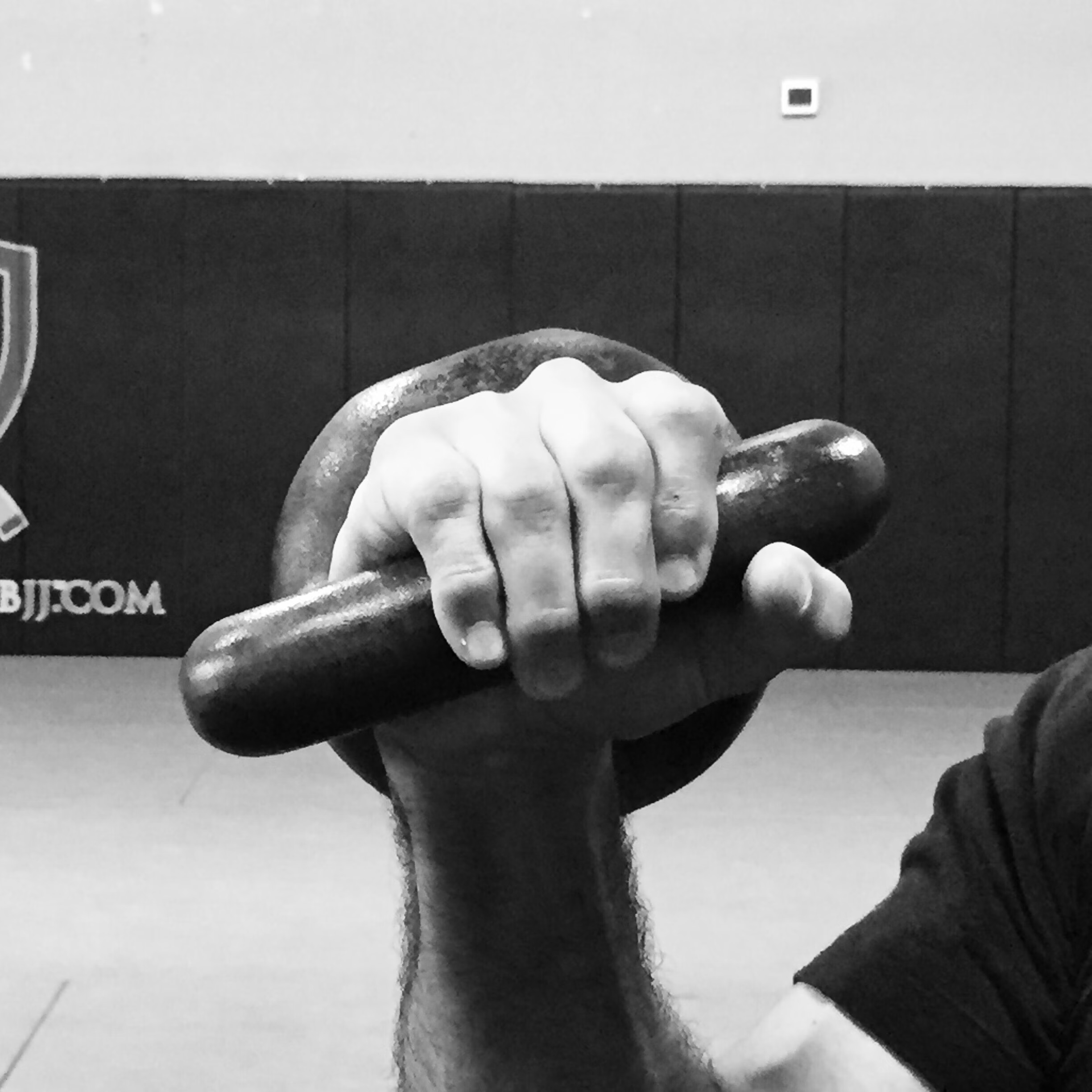
The Crush Grip (For Grinds): When you squeeze the handle, you trigger hyper-irradiation—a neurological phenomenon where tension in the hand recruits the nearby working muscles in your forearm, shoulder, and abs. This tension makes you instantly stronger, and as a consequence... the weight feel lighter.
- Establish Your Anatomy: Your hand anatomy dictates how you should crush. As StrongFirst Certified Master Emeritus Brett Jones outlines in his StrongFirst article, Optimizing the Kettlebell Military Press Grip—For You, you are either naturally radially deviated or ulnar deviated.
- Radial Deviation (Wrist straight/flush): If your hand naturally aligns straight, you will get a stronger, pain-free press by gripping the handle more towards the pinky side (radial position). This allows you to get a full, tight squeeze with no gap in your palm.
- Ulnar Deviation (Wrist angled out): If your wrist naturally angles outward, you will perform better by holding the bell diagonally across the hand, sitting deeper in the grip.
- Aligning your crush grip to your specific anatomy plugs the physical leaks in your shoulder and wrist, keeping your joints healthy.
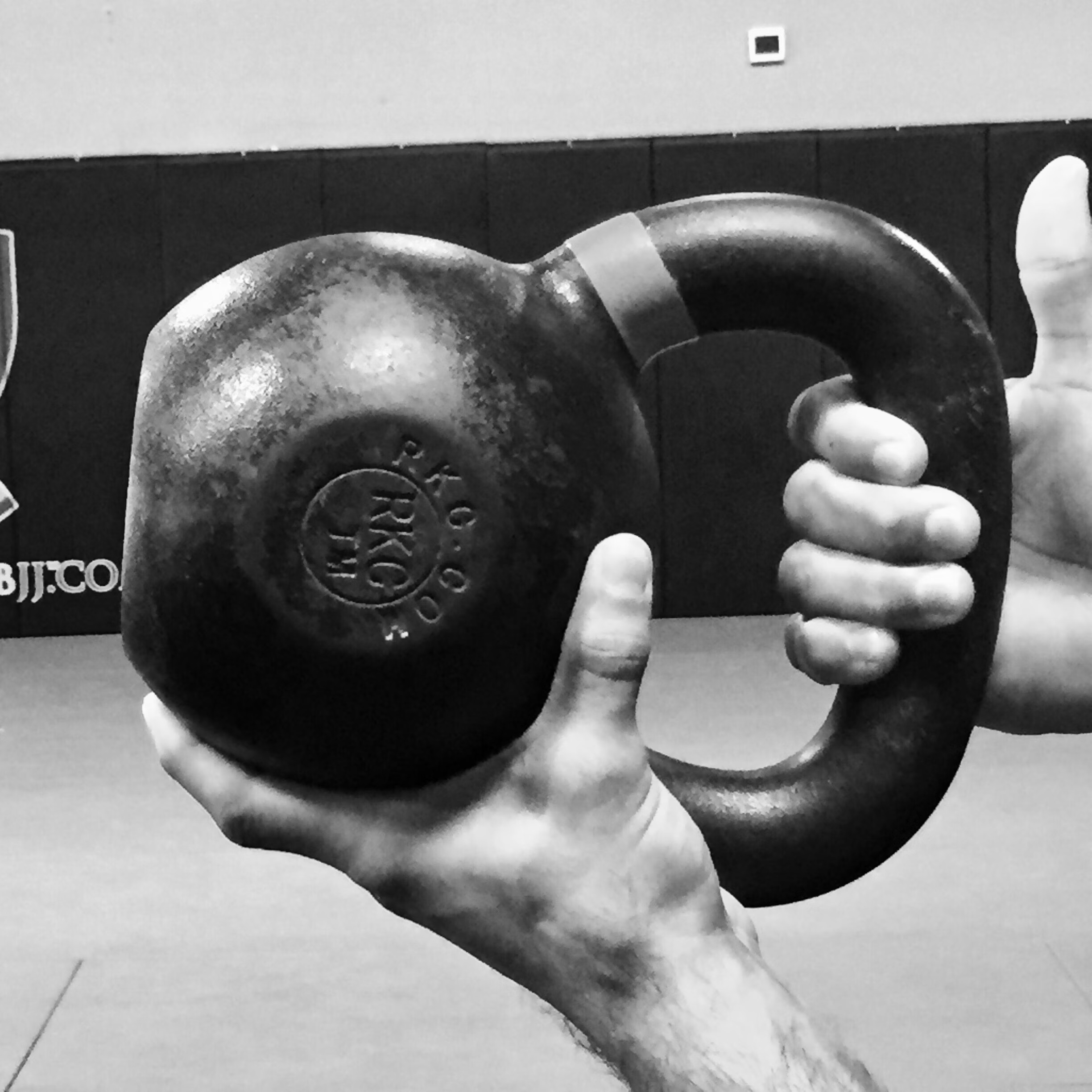
The Hook Grip (For Ballistics): For swings, cleans, and snatches, you must completely bypass the center of the palm. Hook the bell solely in the fingers—along the callus line where the fingers meet the hand. By keeping the handle out of the center of your palm, you eliminate the pinching and friction that causes painful tears.
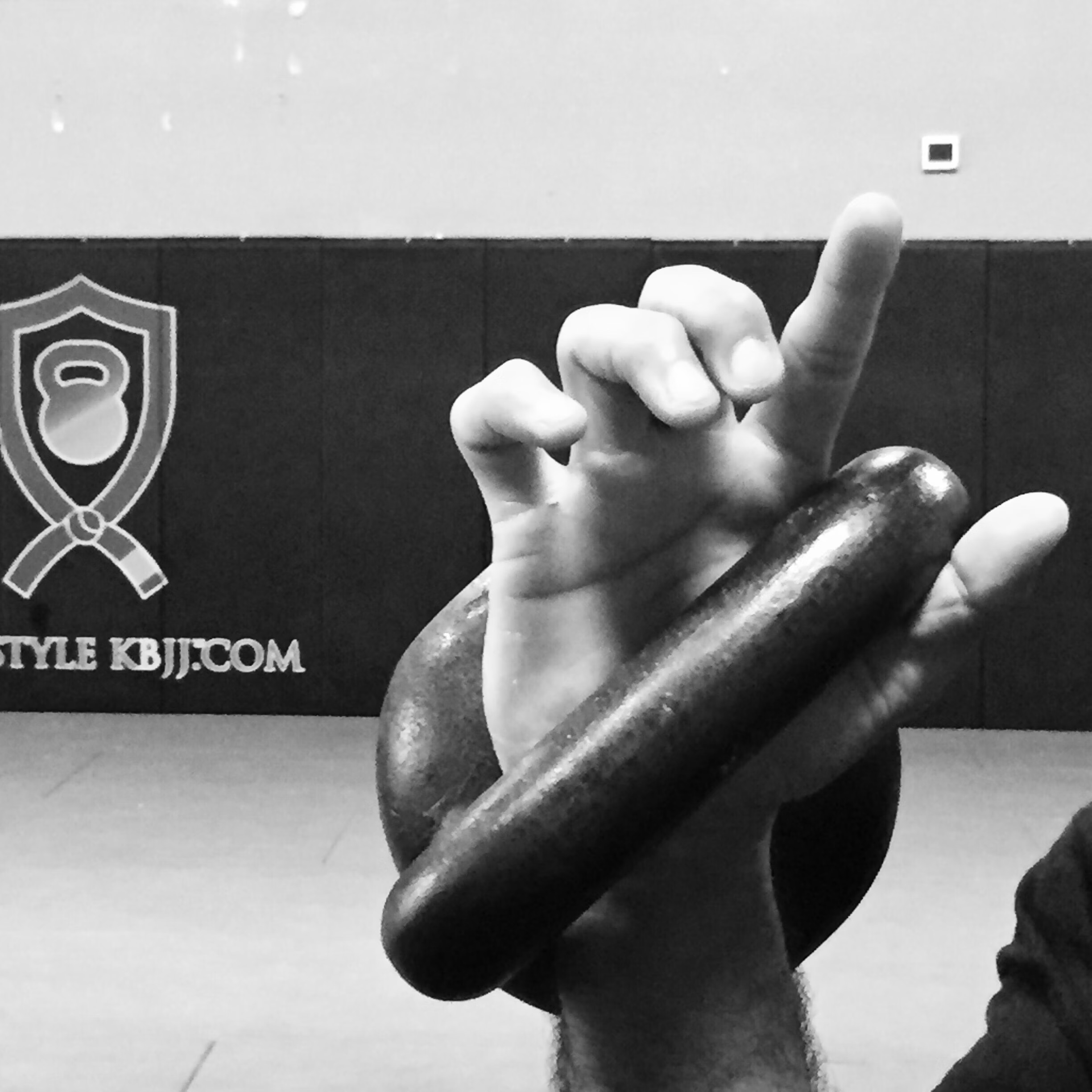
The False Grip (For High-Volume Ballistics): When performing high-volume cleans, snatches, or jerks, slide your hand deeply into the corner of the bell on the thumb side. The handle should sit diagonally across your palm, and your grip should completely relax. This is the False Grip. The bell locks into place structurally against your forearm, allowing your fingers and forearms to rest.
Pillar 3: Master the Transition (The "Holy Pause" of the Hand)
The ultimate skill of a kettlebellista is the ability to move the hand in and out of the bell during ballistics without friction or impact.
- Relax the Grip: When you drive and snap your hips in a clean or snatch, you must completely relax your hand the moment the bell becomes weightless.
- Open the Hand: As the bell rises, do not hold it tight. Open your hand inside the handle. This allows your hand to slide smoothly through the handle, transitioning from a finger-hook grip to a deep false grip in the rack or overhead position.
- No Impact: If you relax your grip at the right millisecond, the kettlebell will roll smoothly around your wrist rather than flopping over and smacking you.
- Practice with Light Weight: "Make a light weight look heavy, and a heavy weight look light." If you can perform this transition flawlessly with a light kettlebell (where you must actively open your hand to show relaxation), you will execute it effortlessly when the iron gets heavy.
Training for the Long haul
Why do we obsess over the micro-details of how our skin meets the iron?
Because we are playing the long game. We are training for Longevity, and Liberty.
This is the essence of upstream thinking. By focusing on the skill of gripping, we solve the downstream problems of torn hands, bruised wrists, and shoulder impingement before they ever have an opportunity to manifest. We refine our movement patterns so we can train consistently, week after week, year after year.
For over 15 years, I have coached busy men and women over 40 to build stronger, leaner, and more capable bodies in just 90 minutes of training per week. We didn't do it by mindlessly beating ourselves into the ground. We did it through the strategy, structure, systems, a skill of Hardstyle strength training.
The physical discipline of mastering your grip has profound carryover to every aspect of your life as well. When you learn to order your physical movements with precision, you begin to order your passions too. You build a stronger mind, a more disciplined spirit, and a deep sense of self-mastery.
But the ultimate "why" is what this strength allows you to do outside of your training room.
At Hardstyle, we do not train to be the best at exercise. We train to build a capable, resilient temple so we can lay down our lives as a sincere gift to those we love. If your hands are torn, your wrists are bruised, and your shoulders are wrecked, you cannot (CANNOT!) train. When you cannot train... you cannot serve.
Master your grip. Protect your temple. Live on mission.
Hope this helps you out.
hec .g
UPDATE: 26 May 2025
You can continue reading part 3 of the Kettlebell Beginner's Guide series: What Kettlebell Exercises to Focus on First, here.